
What is Robotic Surgery?
Robotic surgery is a modern, minimally invasive approach where your surgeon uses an advanced robotic system. Specifically, it is designed not to replace their expertise, but to extend it. As a result, patients experience greater precision, smaller incisions, and faster healing. Therefore, recovery is much easier.
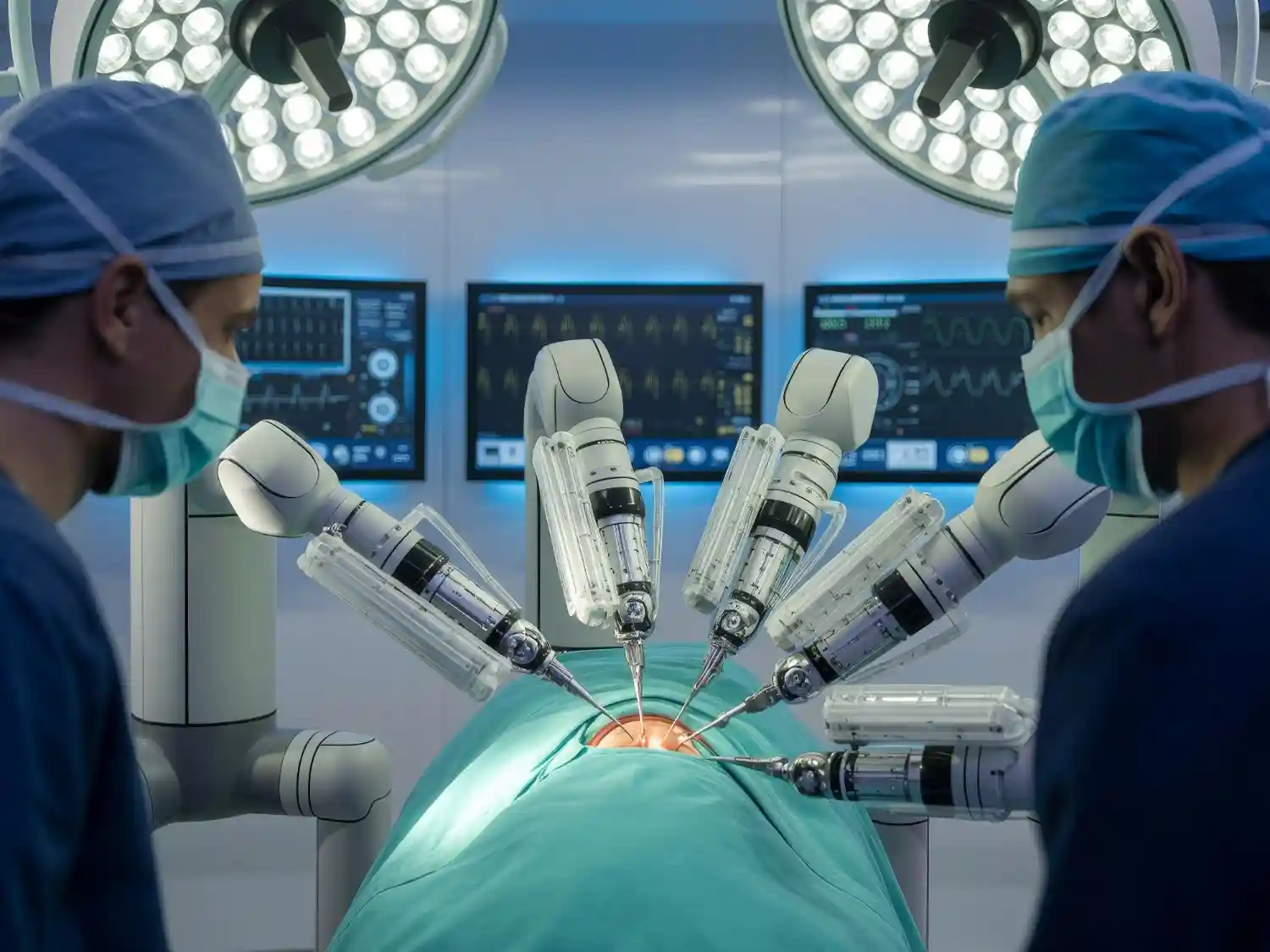
What is Robotic Surgery, in Simple Terms?
Advanced Precision and Control
To begin with, robotic surgery is a surgical technique where your doctor uses a sophisticated robotic system to perform an operation with a level of precision that goes beyond what is possible with the human hand alone. Importantly, the robot does not operate independently; rather, your surgeon is in full control at every moment.
How the Technology Comes Together
Furthermore, the system includes robotic arms that hold miniature instruments, a high-definition 3D camera that magnifies the surgical site, and a console where the surgeon guides every movement in real time. Consequently, instead of one large incision, the procedure requires only a few tiny openings. Thus, this means far less trauma to surrounding tissue.
Expected Patient Outcomes
Ultimately, the result is a surgery that is gentler on your body. Therefore, you can expect less bleeding, less pain, and a significantly faster recovery compared to traditional open surgery. Moreover, hospital stays are drastically minimized.
Success Rate
Hospital Stay
Incisions
Loss
The Three Core Components
Robotic Arms
3D HD Camera
Surgeon’s Console
How Robotic Surgery Works
Small Incisions
Ports Inserted
Camera Placed
Surgeon Operates
Closure & Recovery
Benefits of Robotic Surgery
Less Pain
Smaller Scars
Faster Recovery
Lower Infection Risk
Short Hospital Stay
Greater Precision
Recovery After Robotic Surgery
One of the most meaningful advantages of robotic surgery is how quickly patients feel like themselves again. In fact, recovery is far shorter than traditional open surgery. Consequently, most patients are genuinely surprised by their rapid progress. Therefore, returning to your normal life is quicker.
The Recovery Timeline
Within hours
Same day or next day
Days 2–7
2–4 weeks
At-Home Care Tips
- Firstly, rest for the first few days as directed by your surgeon.
- Secondly, resume activities gradually — specifically, listen to your body.
- Thirdly, avoid heavy lifting until your follow-up appointment.
- Additionally, monitor the incision site for warmth, redness, or discharge.
- Furthermore, take prescribed pain or anti-constipation medication as directed.
- Crucially, call your care team immediately if you notice fever, swelling, or unusual bleeding.
- Lastly, attend all scheduled follow-up visits.
Need a Second Opinion?
Speak directly with a robotic surgery specialist at Mitra, Kochi. Specifically, you will get honest, expert answers about your condition. Furthermore, there are no waiting rooms, and therefore, no appointments needed.
Frequently Asked Questions About Robotic Surgery
Safety and Effectiveness
Absolutely. Robotic surgery has an overall success rate of 94–100%. Furthermore, it is performed by surgeons who have completed additional, specialised training in robotic techniques. Importantly, the system enhances — not replaces — the surgeon’s skill. Consequently, robotic malfunction is extremely rare, and thus, safety protocols are rigorous.
Robotic surgery is not universally “better” — rather, it is one of several effective approaches. However, research shows it offers similar outcomes to laparoscopic surgery, but importantly, with advantages like less pain, smaller scars, and shorter hospital stays for many procedures. Therefore, your Mitra surgeon will advise based on your specific condition.
Recovery and Pain Management
Generally, recovery is significantly faster than traditional open surgery. As a result, many patients go home the same day or the next day. Subsequently, most resume light activities within a few days. Ultimately, they achieve full recovery within 2–4 weeks, depending on the type of procedure and overall health.
First, you will be under general anesthesia during the procedure, so you will feel nothing. Afterward, some mild discomfort is normal, yet the vast majority of patients report significantly less postoperative pain than after traditional open surgery. Ultimately, pain is manageable with medications prescribed by your care team. Therefore, you stay comfortable.
Consultations and Cost
Not at all. Initially, Mitra begins with a remote consultation to review your existing reports and imaging. Subsequently, a visit to Kochi is only arranged when it is necessary for your procedure. Moreover, our team provides full logistical support to make the process as easy as possible. Thus, the process is simple.
Yes, indeed. Mitra’s mission is to make premium robotic surgical care accessible at the same price as traditional surgery. Additionally, patients can also benefit from interest-free EMI options. Furthermore, there is robust insurance support, and ultimately, savings of up to 40% compared to standard hospital rates.